

Introduction
Packing is one of the biggest tasks during a move, but many people overlook one simple step that can save hours of time later—labeling every box correctly. While it may seem unnecessary when you already know what you packed, once dozens of similar-looking boxes are stacked inside a moving truck, identifying their contents becomes much more difficult.
Proper labeling helps homeowners stay organized before, during, and after the move. It also allows professional movers to place boxes in the correct rooms, making unpacking faster and more efficient. A reliable moving company depends on clear information to transport and unload belongings safely, and well-labeled boxes make that process much easier.
Whether you are planning a local move or a long-distance relocation, this guide explains why labeling matters and how it contributes to a successful moving experience.
Why Labeling Is So Important
Many homeowners focus on packing boxes securely but forget to identify what is inside each one.
Without labels, unpacking becomes a guessing game. You may spend valuable time opening multiple boxes just to find basic household items such as kitchen utensils, bathroom supplies, or important documents.
Clear labels eliminate this confusion by providing immediate information about both the contents of the box and the room where it belongs.
This simple habit saves time from the moment the movers begin unloading.
Makes Unloading Faster
Professional movers work more efficiently when boxes are clearly labeled.
Instead of asking where every box belongs, the moving team can immediately place each one in the correct room according to the label.
This reduces unnecessary lifting because boxes rarely need to be moved a second time after unloading.
Efficient unloading also helps homeowners begin unpacking sooner and creates a more organized first day in the new home.
Helps Protect Fragile Belongings
Some boxes require more careful handling than others.
Glassware, dishes, mirrors, decorative items, and electronics should always be clearly marked as fragile. When movers know which boxes contain delicate belongings, they can handle them with additional care during loading, transportation, and unloading.
Professional moving services appreciate accurate labeling because it helps protect valuable household items throughout the relocation.
Proper communication through labels contributes to safer transportation.
Makes Unpacking Easier
After arriving at your new home, the real value of good labeling becomes obvious.
Instead of opening random boxes, you can unpack room by room using the information written on each box. Kitchen boxes stay in the kitchen, bedroom belongings remain in the bedrooms, and office supplies go directly to the workspace.
This organized approach reduces clutter and helps every family member know where to find important belongings.
Systematic unpacking also creates a more comfortable transition into your new home.
Include More Than the Room Name
Many people label boxes with only the destination room.
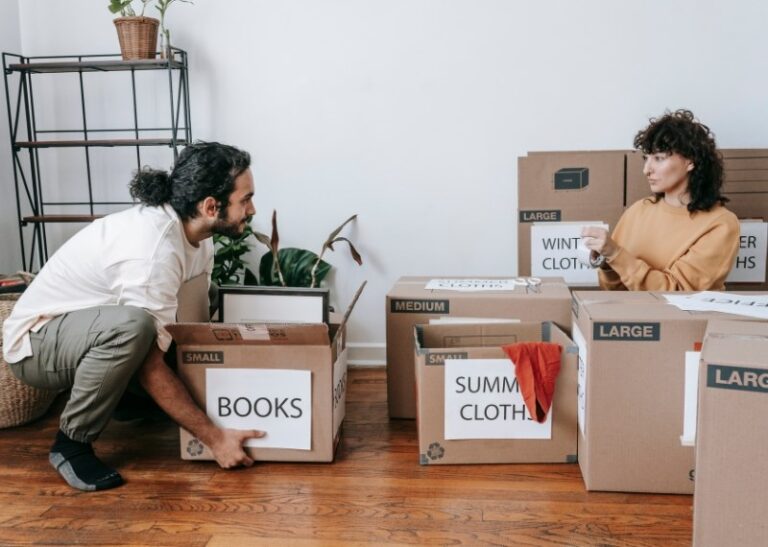
Although this is helpful, adding a brief description of the contents provides even greater convenience. For example, instead of writing only “Kitchen,” include information such as “Kitchen – Plates and Glasses” or “Kitchen – Pots and Cooking Utensils.”
These small details make unpacking much more efficient because you immediately know what each box contains.
Detailed labels save time throughout the relocation.
Keep Labels Easy to Read
Labels should be large, clear, and easy to identify.
Write neatly using a permanent marker and place labels on multiple sides of the box whenever possible. Boxes are often stacked during transportation, so visible labels make identification much easier.
Avoid writing small notes that are difficult to read from a distance.
Professional movers can work much faster when labels are clear and visible.
Use a Consistent Labeling System
Consistency helps keep your entire move organized.
Use the same format for every box throughout the home. Include the destination room, a short description of the contents, and a note if the box contains fragile belongings.
Following the same system for every room reduces confusion and allows everyone involved in the move to understand the labeling immediately.
An organized system makes both packing and unpacking easier.
Separate Essential Boxes
Some boxes should receive special attention.
Items needed immediately after moving—such as toiletries, medications, chargers, basic kitchen supplies, important documents, and clothing—should be packed separately and clearly identified.
These boxes should remain easily accessible rather than being buried beneath dozens of other boxes.
Keeping essential belongings organized makes your first day in the new home much more comfortable.
Communicate With Your Movers
Labels work best when combined with good communication.
Before loading begins, explain your labeling system to the moving company. Point out boxes containing delicate or valuable belongings so the movers understand which items require extra attention.
Professional movers appreciate organized customers because clear instructions help them provide better moving services.
Working together reduces mistakes and improves efficiency.
Avoid Common Labeling Mistakes
One common mistake is waiting until every box has been sealed before thinking about labels.
Another mistake is writing labels only on the top of each box, making them difficult to read once boxes are stacked.
Some homeowners also use vague descriptions such as “Miscellaneous,” which provide little useful information during unpacking.
Taking an extra few seconds to write clear labels prevents these problems.
Why Professional Movers Appreciate Organized Boxes
Experienced movers transport hundreds of boxes during every relocation.
When boxes are properly labeled, loading becomes more organized, transportation is safer, and unloading is completed much faster.
A professional moving company can also arrange fragile boxes more carefully inside the moving truck when their contents are clearly identified.
Good organization helps both homeowners and movers complete the relocation more efficiently.
Frequently Asked Questions
1. Why should I label every moving box?
Labels help movers place boxes in the correct rooms and make unpacking much faster after arriving at your new home.
2. What information should I include on each box?
Include the destination room, a short description of the contents, and whether the box contains fragile items.
3. Should fragile boxes be labeled separately?
Yes. Clearly marking fragile boxes allows professional movers to handle them with additional care during transportation.
4. Where should labels be placed?
Place labels on multiple sides of the box so they remain visible even when boxes are stacked.
5. How do labeled boxes improve moving services?
Well-labeled boxes allow movers to load, transport, and unload belongings more efficiently while reducing confusion and unnecessary lifting.
Conclusion
Labeling boxes may seem like a small task, but it has a major impact on the success of any move. Clear labels improve organization, protect fragile belongings, simplify unpacking, and help professional movers work more efficiently. A few extra minutes spent labeling every box carefully can save hours of work after arriving at your new home.
Working with experienced movers and a dependable moving company becomes even more effective when your belongings are properly organized. Professional moving services rely on clear communication and thoughtful preparation to deliver the best possible relocation experience. By creating a simple and consistent labeling system, you can enjoy a smoother, faster, and less stressful move from beginning to end.
You May Also Like
How to Label Boxes Efficient ...
27 February 2026
Full-Service Moving vs DIY: ...
26 October 2025

Helping Kids Adjust Emotiona ...
23 October 2025


